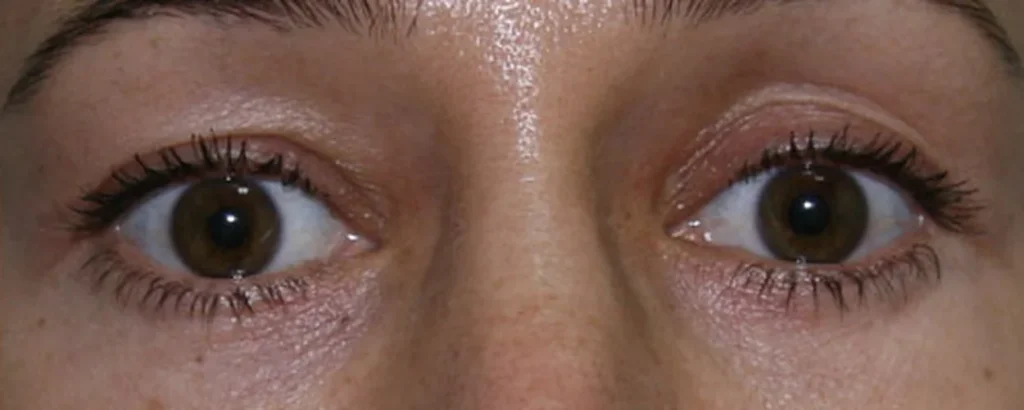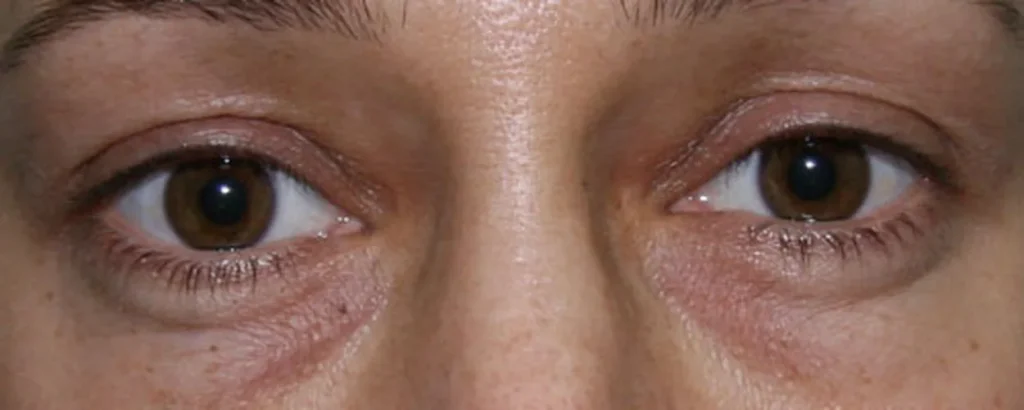
What blepharoplasty is
With age, the eyelid skin loses elasticity and the fat around the eye becomes more visible. On the upper lid a fold of skin drops towards the lashes and sometimes makes applying make-up, or even side vision, difficult. On the lower lid bags form, and the eyes look tired even after a good night’s sleep.
Blepharoplasty corrects these changes by removing excess skin and, where needed, reducing or repositioning the fat. The operation does not change the shape of the eye and should not change your expression; the aim is a more rested look, like the one you had a few years ago.
Who it is for
Upper blepharoplasty suits people who have:
- excess skin resting on the eyelid or the lashes;
- a heavy-eyelid feeling towards the end of the day;
- difficulty applying make-up;
- in more advanced cases, a restricted upper field of vision.
Lower blepharoplasty mainly treats under-eye bags and wrinkled or loose skin on the lower lid.
Not every “droopy” eyelid needs blepharoplasty. If the edge of the eyelid drops over the pupil, the cause may be eyelid ptosis (weakness of the muscle that lifts the lid), which is treated differently. Likewise, low eyebrows can give the impression of excess skin; in these cases a brow lift may be the right solution or may complement blepharoplasty. The difference becomes clear at the consultation.
The operation is postponed or not recommended with active eye disease, severe dry eye, active thyroid eye disease or uncontrolled high blood pressure.
The consultation
At the consultation the doctor examines the eyelids, eyebrows and lash position, assesses skin quality and discusses what specifically bothers you. It is important to mention whether you wear contact lenses, have had eye surgery (including laser vision correction), have dry eyes or take medication that affects clotting.
If needed, you will be referred for an eye examination before the operation. The type of anaesthesia and the date are also agreed at the consultation.
How the operation is done
For the upper lid, the incision is made in the natural crease of the eyelid, so the scar stays hidden when the eyes are open. Excess skin is removed and, if present, some of the fat that bulges towards the inner corner of the eye.
For the lower lid there are two approaches: a very fine incision just below the lash line or, when there is no excess skin, an incision on the inside of the lid with no visible scar. The choice depends on what needs correcting.
Upper blepharoplasty is usually done under local anaesthesia; for both upper and lower lids, or for patients who prefer not to be awake, sedation or general anaesthesia can be used. It generally takes about an hour for the upper lids and up to two hours when both are treated.
Preparation
- About two weeks before, stop medication and supplements that increase bleeding risk (aspirin, anti-inflammatories, some omega-3, ginkgo or vitamin E supplements), only with the prescribing doctor’s approval.
- Smoking slows healing; ideally stop for a few weeks before and after.
- On the day, come without make-up or contact lenses.
- If the operation is done with sedation or general anaesthesia, someone needs to drive you home.
Recovery
Recovery is relatively short, but the first days need patience:
- First 48 hours: swelling and bruising are at their most visible. Cold compresses and sleeping with your head slightly raised help. Discomfort is usually moderate and controlled with ordinary painkillers.
- Days 5–7: the stitches are removed. Most patients return to desk work around this time.
- After 10–14 days: the bruising has mostly gone; make-up can usually be used once the stitches are out and the incisions have healed.
- 3–6 weeks: avoid intense exercise, swimming pools and direct sun.
- 3–6 months: the scar fades gradually and the result settles.
Contact lenses can usually be worn again after about two weeks, and sunglasses are recommended in the first weeks.
Results
The result of upper blepharoplasty usually lasts many years. The operation does not stop ageing: the skin will keep changing over time, but from a better starting point. Results vary from one patient to another, depending on skin quality, age and healing.
Risks and things to know
Blepharoplasty is a common operation and, done properly, has a low risk of complications. Still, like any surgery, it is not without risk:
- swelling, bruising and temporarily dry or irritated eyes, which are usual in the first weeks;
- temporary difficulty closing the eyes fully during sleep;
- slight asymmetry or scars that are more visible than usual;
- after lower blepharoplasty, the lid margin pulling down (ectropion), most often temporary;
- haematoma or infection, both rare;
- very rarely, complications affecting vision; that is why severe pain or reduced vision after surgery must be reported to the doctor immediately.
The risks are reduced by careful assessment before surgery, a technique adapted to the individual eyelid and following the instructions during recovery.