What a tummy tuck is
A tummy tuck (abdominoplasty) removes excess skin and fatty tissue from the lower abdomen and tightens the rectus muscles if they have separated (diastasis). The remaining skin is pulled down and the belly button is repositioned.
When the excess skin is large and hangs over the pubic area, it is called an abdominal apron; the treatment is still a tummy tuck, adapted to the volume.
There are two main types:
- Full tummy tuck, for excess skin above and below the belly button; it includes repositioning the belly button and usually repairing the muscle wall.
- Mini tummy tuck, for limited excess below the belly button, with a shorter scar.
Who it is for
- women who are not planning more pregnancies and have loose skin or stretch marks on the lower abdomen;
- people who have lost a lot of weight and are left with excess skin;
- patients with separated abdominal muscles that exercise does not correct;
- healthy non-smokers with a stable weight.
A tummy tuck is not a weight-loss method. If the problem is only localised fat and the skin is elastic, liposuction may be enough. It is better to postpone surgery if you are planning a pregnancy or expect to lose more weight.
The consultation
The doctor assesses the excess skin, the thickness of the fat, the state of the muscles and any previous scars (for example from a caesarean). An umbilical hernia or other abdominal wall problems are also checked. You find out which type of tummy tuck suits you and where the scar will be.
How the operation is done
The operation is done under general anaesthesia and takes two to four hours. The incision is low, above the pubic area, so that the scar is covered by underwear or swimwear. The muscles are tightened, excess skin is removed, the belly button is repositioned and the incision is closed in several layers. A tummy tuck can be combined with liposuction of the flanks for a more balanced contour.
One or two nights in hospital usually follow.
Preparation
- A full medical assessment, blood tests and, depending on the case, a cardiology check.
- Stopping smoking at least 4 weeks before, as smoking significantly increases the risk of healing problems.
- A discussion about preventing blood clots (early walking, compression stockings and sometimes preventive anticoagulants).
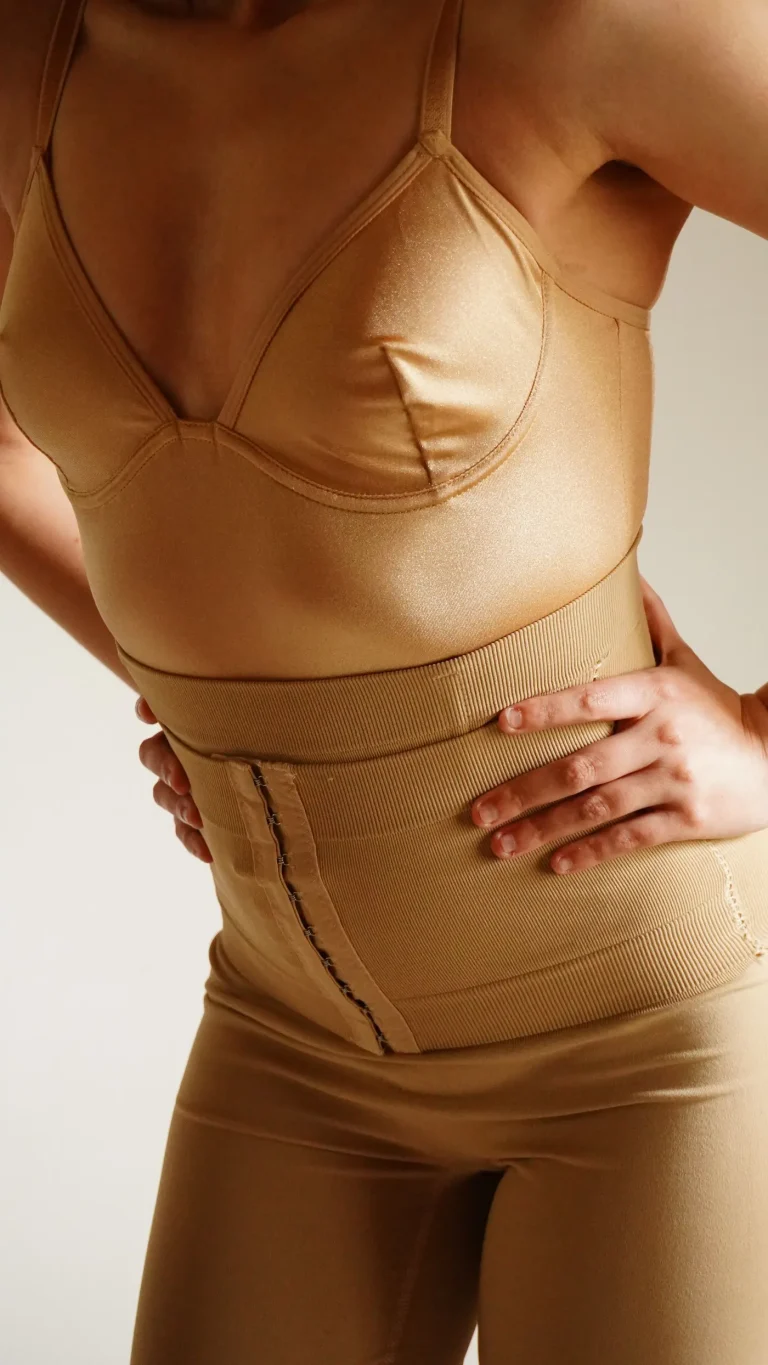
- Getting the abdominal binder ready and a comfortable space at home for the first days.
Recovery
- First days: you walk slightly bent forward so as not to strain the scar. Walking starts on day one. There may be drains, which come out after a few days.
- 1–2 weeks: pain eases gradually; avoid lifting.
- 2–3 weeks: back to desk work.
- 6 weeks: the binder is worn day and night; after that, sport and strain resume gradually.
- 6–12 months: the scar matures and fades.
Results
The abdomen becomes flatter and firmer and the waist more defined. The result lasts if your weight stays stable and there is no further pregnancy. The scar is permanent, but in most cases it fades and can be hidden by underwear. Results vary from one patient to another.
Risks and things to know
- seroma (fluid collection), which may need draining;
- wound healing problems, more common in smokers and people with diabetes;
- a widened or raised scar;
- numbness of the skin below the belly button, sometimes long-lasting;
- asymmetry or small irregularities at the ends of the scar;
- deep vein thrombosis or pulmonary embolism, rare but serious; prevention is an essential part of preparation.